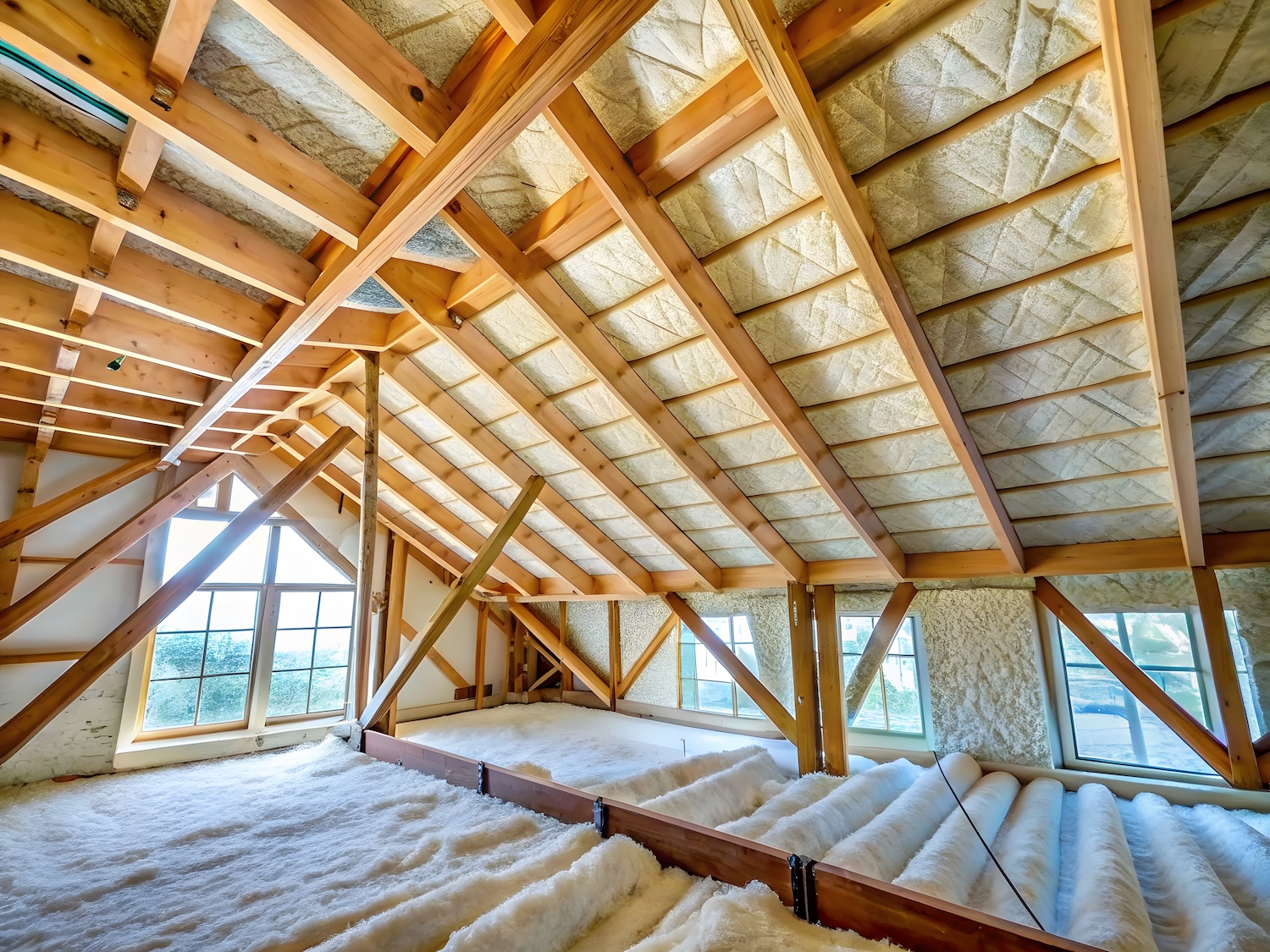
Spray foam insulation in Mesa, for roof decks, new builds and metal buildings
Spray foam goes where loose insulation can't stay put. That means the underside of a roof deck, an unvented attic, the walls of a custom home and metal buildings. We spray open-cell and closed-cell foam, and we help you pick the one that fits.
Both foams seal air leaks where they are sprayed, so one step both insulates and stops drafts. Open-cell is light and soft, while closed-cell is dense and rigid. That difference in density decides where each one belongs. We look at the space and the goal before we suggest either one.
Open-cell foam
At roughly R-3.6 per inch, open-cell fills deep cavities and the underside of roof decks, sealing air leaks where it lands.
Closed-cell foam
At about R-6 per inch, closed-cell packs more R-value into a thin layer and resists air and water vapor. It suits tight spaces and metal buildings.
Our foam crews work for homeowners, custom builders and commercial owners. Foam can share one contract with batts, blown-in, windows and doors. For a plain attic top-up, our attic insulation page is the better place to start.
Underside of roof decks
Unvented attic assemblies
Custom home walls and roofs
Metal buildings and shops
Open-cell foam for deep cavities
Closed-cell foam for tight spaces
Foam and batts on one bid
Commercial new construction
Questions About Your Project?
Call us or send the details online. We follow up within one business day.
The Gateway Area, anchored by Mesa Gateway Airport, is 35 square miles of developing land. New buildings there can plan foam into roofs and walls from day one, before anything is closed in.
The Falcon District
Mesa's economic development office ties the Falcon District to aerospace, defense and advanced manufacturing, with Falcon Field Airport. For a metal building there, closed-cell foam's density and vapor resistance are worth a look.
Heat on the roof deck
Phoenix's 2024 summer ran 113 straight days at 100°F or more, May 27 through September 16. That was measured at Sky Harbor, and readings vary across the Valley. Foam on the roof deck slows that heat on its way down.
Who checks the work
Here, the city both issues the commercial permit and sends the inspector. On a new home or a commercial job, we spray to the approved plans so the work is ready when inspection comes.
Why Vezina
Why call us for foam
Bids in 48 hours
Send plans and the detailed bid is back inside 48 hours, with a named project manager for each community. Homeowners hear back within one business day.
Our own spray crews
Every installer is a Vezina employee, including the crew on the spray rig. We don't hand foam work to subcontractors.
One contract, one contact
Foam, batts, blown-in, windows and doors can all go under one contract, with one crew and one point of contact.
Licensed and insured
Licensed as AZ ROC #345515, bonded, and insured for liability and workers' comp. We've been in business since 2005, in homes and commercial buildings.
FAQs: Mesa Spray Foam
Spray foam questions in Mesa
Can you foam a metal building in the Falcon District?
Yes. Closed-cell foam is dense and rigid and resists water vapor, so it's the one we look at first for metal buildings. Mesa handles commercial permits and inspections itself, so we work from the approved plans and fit our crew into the GC's schedule.
Which energy code applies to foam in a new Mesa build?
Arizona leaves the energy code to each city or county, which adopts its own edition of the IECC, sometimes with local changes. A new Mesa building follows the edition the city has adopted, and the R-values on your approved plans reflect it. We install to those plans.
Do you spray foam new custom homes?
Yes. Plans in, detailed bid out within 48 hours. Foam suits unvented attics and roof decks on custom builds, and we can quote the windows and doors at the same time. One company then covers the foam, windows and doors. Point us to the insulation notes on the plans.
Should I foam my attic or just add blown-in?
It depends on the attic. Blown-in sits on the attic floor and is the simpler way to add depth over what's there. Foam goes on the underside of the roof deck and makes an unvented attic. The top-up route is on our batt and blown-in page.
Mesa, AZ · ROC #345515
Request a spray foam quote
Tell us about the space, its size and whether it's a home, a new build or a commercial building. We follow up within one business day.