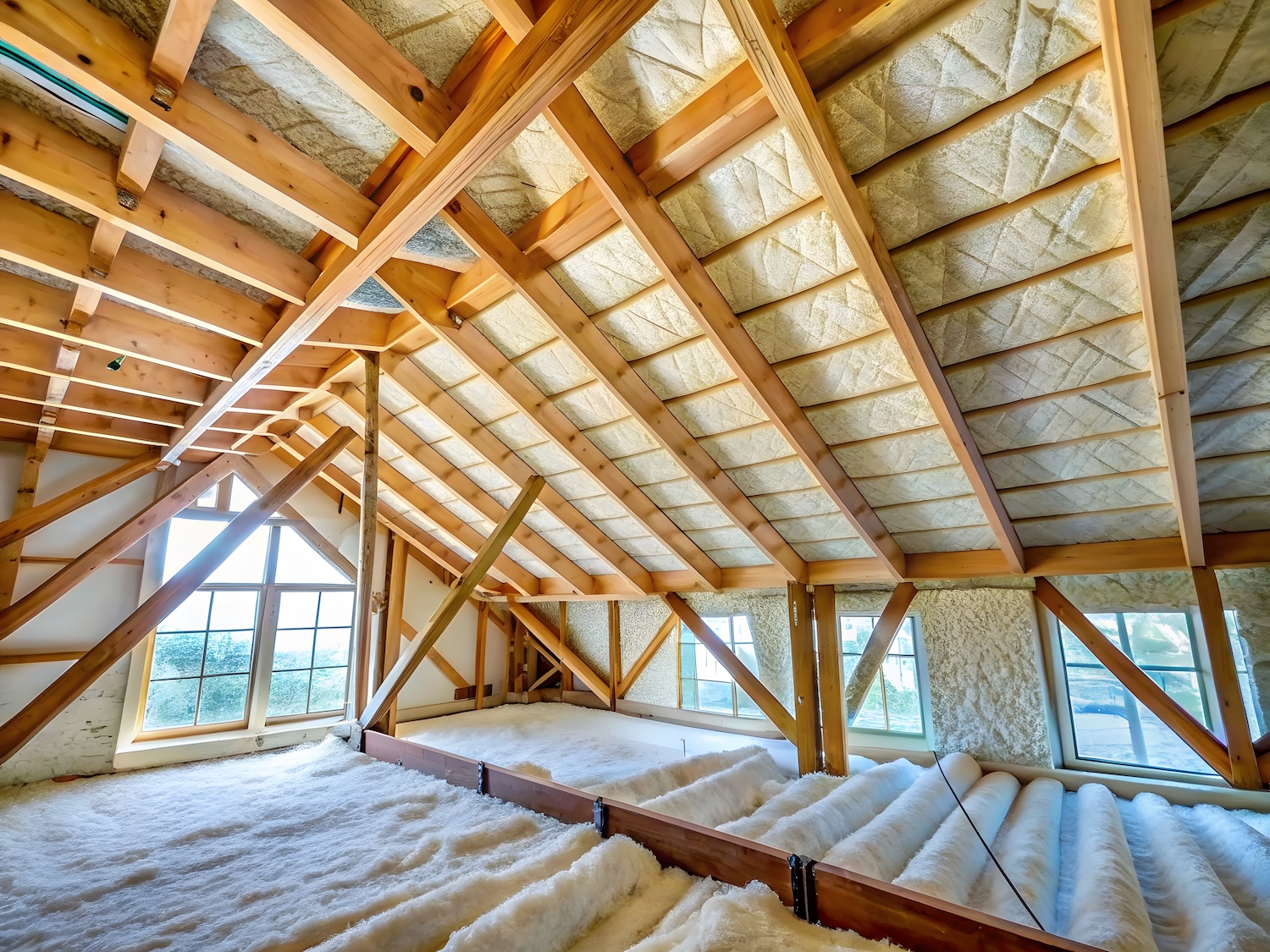
Spray foam insulation in Scottsdale, open-cell or closed-cell.
Spray foam insulates and seals air leaks in the same pass. In Scottsdale, that could mean the roof deck of a Grayhawk home or the walls of a custom build. It could also mean the inside of a metal building near the Scottsdale Airpark.
Both kinds of foam seal air leaks where they're sprayed. Open-cell is the lighter, softer one, at about R-3.6 per inch. Closed-cell is the dense, rigid one. It gives about R-6 per inch and holds back air and water vapor better than open-cell. Which one you need depends on the space it has to fill.
Roof decks and unvented attics
Foam sprayed on the underside of the roof deck moves the insulation up to the roofline. The attic then sits inside the insulated space instead of out in the heat.
Custom homes and new walls
In new construction, foam fills wall and roof cavities before the drywall goes up. Builders can also mix it with batts.
Metal buildings
Shops and warehouses often have little depth to work with. Closed-cell foam packs more R-value into each inch than open-cell or fiberglass.
Phoenix's Sky Harbor station averages 21 days a year at 110°F or more, and it logged 70 of them in 2024. Readings differ across the Valley, but the roof takes that heat first. Foam at the roof deck slows it before it reaches the attic.
Commercial permits and areas
The City of Scottsdale permits and inspects commercial projects. The Scottsdale Airpark is the city's largest employment center, and commercial work also centers on Old Town Scottsdale and SkySong. We plan foam work around each inspection.
SRP or APS
Scottsdale homes buy power from SRP or APS, depending on the address. SRP residential customers may qualify for SRP's attic insulation rebate. If APS serves your home, ask APS what it offers.
Why Vezina
Why hire us for spray foam
Our own sprayers
The crew spraying your foam works for Vezina. We don't hand foam jobs to subcontractors, on homes or on commercial work.
Both foam types
We carry both foams, so each part of the building gets the one that suits it.
Builder-ready
Builders get a detailed bid within 48 hours of sending plans, plus a named project manager for each community.
Licensed in Arizona
We work under AZ ROC #345515 and carry liability and workers' comp coverage on every foam job.
One contract for more
One contract can cover your foam plus any batts, windows or doors, with one contact for questions.
About 30 minutes away
Our Phoenix office is about 20.3 miles from Scottsdale City Hall, around 30 minutes by I-10 and Loop 202 when traffic is light.
FAQs: Scottsdale Spray Foam
Scottsdale spray foam questions
Can you spray foam in an older Scottsdale home?
It can work, depending on the attic. About 28.8% of homes here were built before 1980, and many more date from the 1980s and 1990s. In an existing home, foam usually goes on the underside of the roof deck. If foam isn't the right fit, a blown-in top-up may be.
How thick does the foam need to be?
It depends on the R-value you're after. ENERGY STAR recommends R49 for an uninsulated attic in climate zone 2, which includes Maricopa County. Closed-cell foam reaches a given R-value in less depth than open-cell. We size the depth to your target and the space you have.
Is spray foam good for a commercial building?
Often, yes. Closed-cell foam is dense and resists air and water vapor, which makes it a common pick for metal buildings. See our commercial insulation page for how we schedule around the GC and city inspections.
Will spray foam change how my HOA home looks?
No. Foam goes on the inside of the roof deck or inside wall cavities, so the outside of the house stays the same. Associations like Gainey Ranch and McCormick Ranch run architectural review and keep approved window colors. Still, check your association's rules before work starts.
Scottsdale, AZ · ROC #345515
Get a spray foam quote in Scottsdale
Tell us whether it's a home, a new build or a metal building, and roughly how big. We'll get back to you within one business day.